
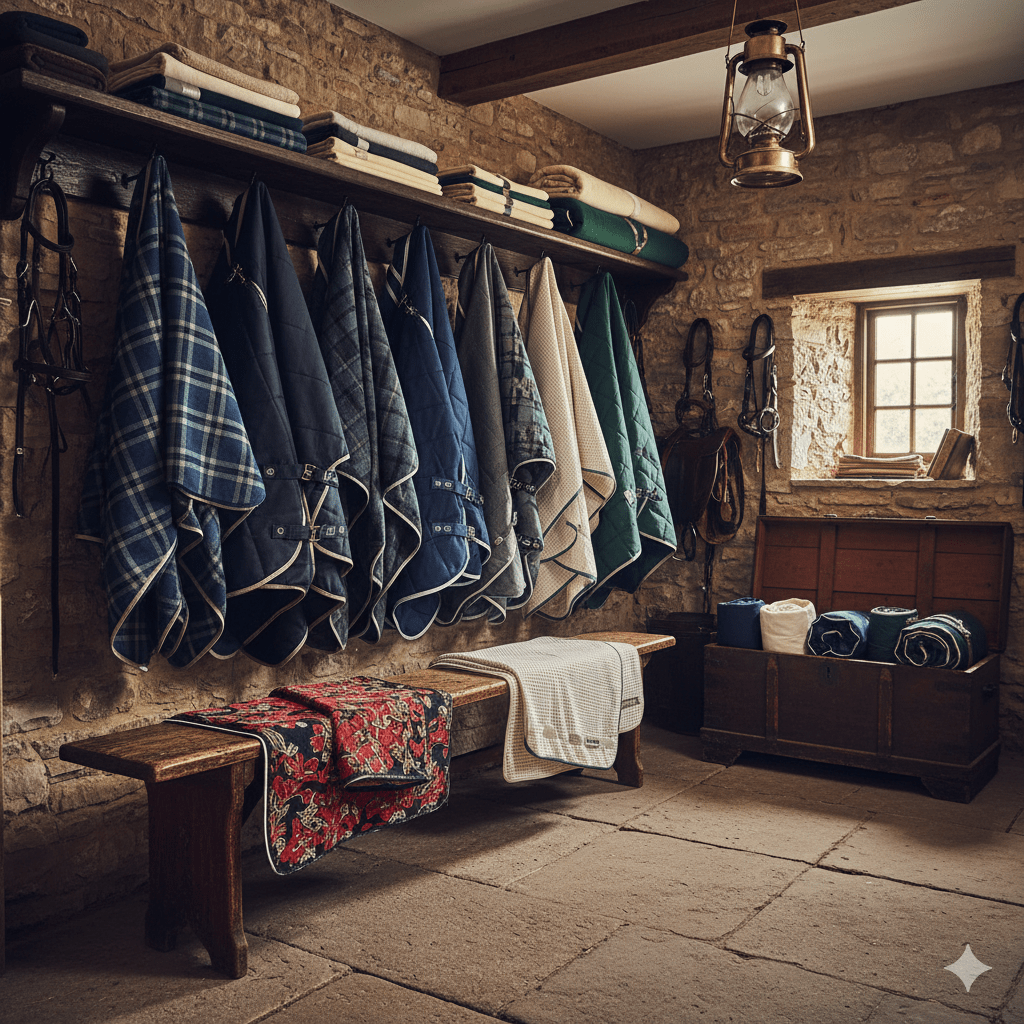
Choosing the right horse rugs in the UK is essential for maintaining your horse’s comfort, coat condition and overall wellbeing. With unpredictable British weather ranging from heavy rainfall to freezing temperatures and humid summer days, selecting appropriate rugging options requires careful consideration.
Whether you are a first-time owner or an experienced rider, understanding rug types, weights, materials and fit will help you make informed decisions.
Understanding the Main Types of Horse Rugs
Turnout Rugs
Turnout rugs are designed specifically for outdoor use. They are waterproof, breathable and built to withstand mud, rain and wind. These rugs are typically made with durable outer materials measured in denier (D). A 600D turnout rug may suit calm horses, while 1200D or higher provides added durability for playful horses or shared turnout environments.
Turnout rugs often include features such as:
- Adjustable chest fastenings
- Cross surcingles
- Tail flaps
- Neck covers (optional)
For a full selection, browse our Horse Rugs category to explore durable turnout options suitable for UK conditions.
Stable Rugs
Stable rugs are designed for indoor use. Unlike turnout rugs, they are not waterproof but focus on insulation. They are ideal for clipped horses during winter or horses stabled overnight.
These rugs are lighter in outer material but warmer internally, providing comfort without unnecessary bulk.
Lightweight Sheets & Summer Rugs
During warmer months, horses may require protection from dust, flies and sun bleaching. Lightweight sheets provide coverage without insulation. These are particularly useful during travel or post-exercise cooling.
Understanding Rug Weights (Fill Guide)
Rug insulation is measured in grams of fill:
- 0g–50g: No fill / lightweight sheet
- 100g–200g: Lightweight
- 200g–300g: Mediumweight
- 300g+: Heavyweight winter rugs
Selecting the correct fill depends on:
- Temperature
- Whether your horse is clipped
- Breed and natural coat thickness
- Turnout duration
Clipped horses generally require heavier rugging compared to native breeds with thick coats.
How to Measure for the Correct Fit
A poorly fitted rug can cause discomfort, rubbing and restricted movement.
To measure:
- Place measuring tape at the centre of the chest.
- Measure along the side of the body.
- End at the rear of the hindquarters.
The rug should:
- Sit comfortably at the chest without gaping
- Cover to the tail
- Allow shoulder freedom
Ill-fitting rugs can lead to shoulder rubs and pressure points, which may impact performance.
Seasonal Rugging Strategy in the UK
Autumn
Temperatures fluctuate. Mediumweight rugs or layering strategies are often ideal.
Winter
Heavyweight turnout rugs are commonly required for clipped horses. Stable rugs may be layered indoors.
Spring
Overheating becomes a risk. Lighter rugs are recommended, particularly during mild days.
Summer
Most horses do not require insulation but may benefit from fly sheets.
To maintain optimal yard organisation while managing seasonal rug changes, explore our Stable & Yard Equipment range.
Materials & Durability
Denier rating affects durability:
- 600D: Light use
- 1200D: Standard durability
- 1680D+: High durability
Breathability ratings and waterproof ratings (measured in mm) also determine performance during heavy rainfall.
Rug Care & Maintenance
Proper care extends rug lifespan:
- Brush off dried mud
- Wash according to manufacturer instructions
- Reproof waterproof rugs annually
- Store in dry conditions
Repair small tears early to prevent further damage.
Common Rugging Mistakes
- Over-rugging
- Using heavyweight rugs in mild weather
- Ignoring fit
- Not adjusting for clipping
Monitoring your horse daily is key to ensuring comfort.
Why Quality Horse Rugs Matter
Investing in quality horse rugs ensures:
- Temperature regulation
- Reduced illness risk
- Improved coat condition
- Greater comfort
At JSM Equestrian Supplies, our collection is selected to meet the practical needs of UK riders.
Browse our full range of Horse Rugs UK to find reliable options designed for British weather conditions.
Leave a Reply