

Blog
How to Create a Daily Routine Horses Thrive On

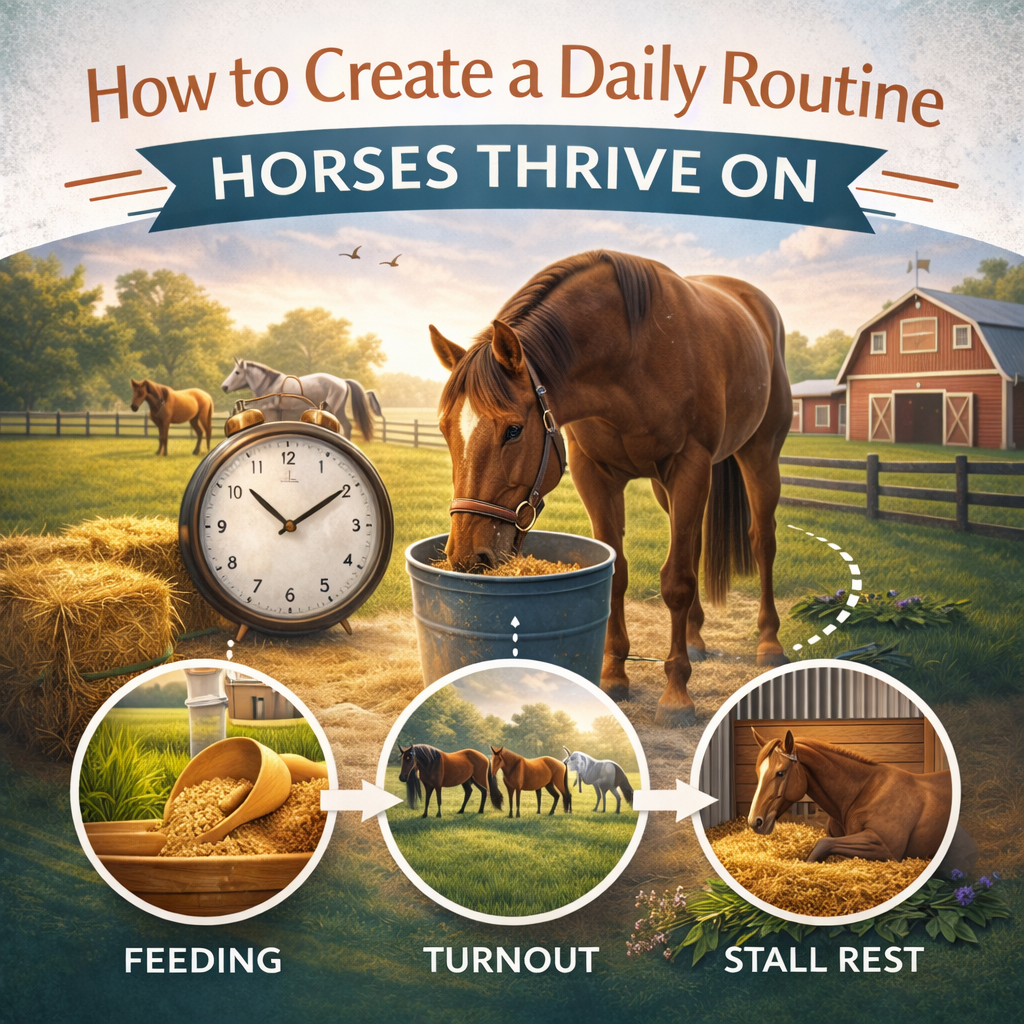
Horses are biologically designed for predictability. In the wild, their days revolve around grazing, movement, herd interaction, and rest — all within a stable rhythm. Domestic management disrupts that natural flow, so it is the owner’s responsibility to recreate consistency wherever possible.
A well-structured daily routine supports:
- Digestive health
- Emotional stability
- Immune function
- Behavioural balance
- Performance consistency
Routine is not restrictive — it is regulating.
Why Routine Matters Physiologically
Horses are prey animals with highly sensitive nervous systems.
Predictable routines:
- Lower cortisol levels
- Support gut motility
- Reduce stress behaviours
- Improve feed efficiency
- Encourage better sleep patterns
Irregular schedules create uncertainty — uncertainty creates tension, and tension affects health.
The Core Elements of a Healthy Daily Routine
A strong routine includes consistency in:
- Feeding
- Turnout
- Exercise
- Social interaction
- Rest
- Monitoring
Structure does not mean rigidity — but timing should remain predictable.
1. Consistent Feeding Times
Horses anticipate feeding.
Feeding at similar times each day:
- Reduces anxiety
- Supports digestive rhythm
- Stabilises insulin response
- Minimises pacing and stress
Best practices:
- Provide near-continuous forage access
- Split concentrates into smaller meals
- Introduce feed changes gradually
Digestive systems rely on consistency.
2. Turnout Routine
Predictable turnout helps regulate behaviour.
Inconsistent turnout can lead to:
- Frustration
- Stable vices
- Sudden energy spikes
Where possible:
- Maintain regular turnout hours
- Provide social contact
- Avoid abrupt field changes
Movement supports both physical and mental health.
3. Exercise Structure
Exercise should:
- Occur at roughly similar times
- Include proper warm-up and cool-down
- Match workload to fitness level
Routine exercise builds confidence and reduces injury risk. Sudden intense work after inactivity increases strain.
4. Social Stability
Horses require companionship.
Stable herd dynamics:
- Reduce stress
- Support natural behaviours
- Promote emotional security
Frequent herd reshuffles can increase tension — stable social groups support calm behaviour.
5. Sleep and Rest
Horses need:
- Quiet periods
- Safe lying-down areas
- Low disturbance environments
Inadequate rest may lead to:
- Irritability
- Reduced performance
- Slower recovery
Consistent yard activity patterns help regulate rest cycles.
6. Grooming and Handling Patterns
Consistent handling:
- Builds trust
- Reduces anxiety
- Improves cooperation
Approach calmly and use familiar routines (for example, consistent order when grooming). Predictable interactions promote relaxation.
7. Health Monitoring Within the Routine
Daily checks should include:
- Monitoring water intake
- Observing droppings
- Feeling legs for heat or swelling
- Checking rugs
- Assessing appetite
Routine observation allows early detection of subtle changes.
8. Seasonal Adjustments — Without Chaos
Seasonal changes are unavoidable, but transitions should be gradual.
- Adjust schedules slowly
- Maintain feeding anchors
- Introduce rug changes progressively
Horses cope best with steady adjustments rather than sudden shifts.
9. Routine During Disruption
Travel, weather, or veterinary visits can disrupt routine.
Reduce impact by:
- Returning to normal schedules promptly
- Maintaining forage consistency
- Avoiding additional stressors
A quick return to routine helps stabilise behaviour.
10. Signs a Horse Is Thriving on Routine
A horse benefiting from consistency will:
- Eat reliably
- Maintain steady weight
- Display calm behaviour
- Rest comfortably
- Perform consistently
- Show fewer stress behaviours
Predictability supports wellbeing.
Common Routine Mistakes
- Feeding at inconsistent times
- Irregular turnout schedules
- Sudden workload changes
- Frequent unnecessary management shifts
- Ignoring stress during transitions
Consistency is stabilising — not restrictive.
The Core Principle
Horses thrive on:
- Predictable feeding
- Regular movement
- Social stability
- Calm handling
- Consistent observation
A strong routine:
- Supports digestive health
- Reduces behavioural issues
- Improves performance
- Enhances emotional security
Good management is not complicated — it is consistent.
.
Knowledge Hub: https://jsm-equestrian-supplies.co.uk/knowledge-hub/
Category: https://jsm-equestrian-supplies.co.uk/category/rider-education/