
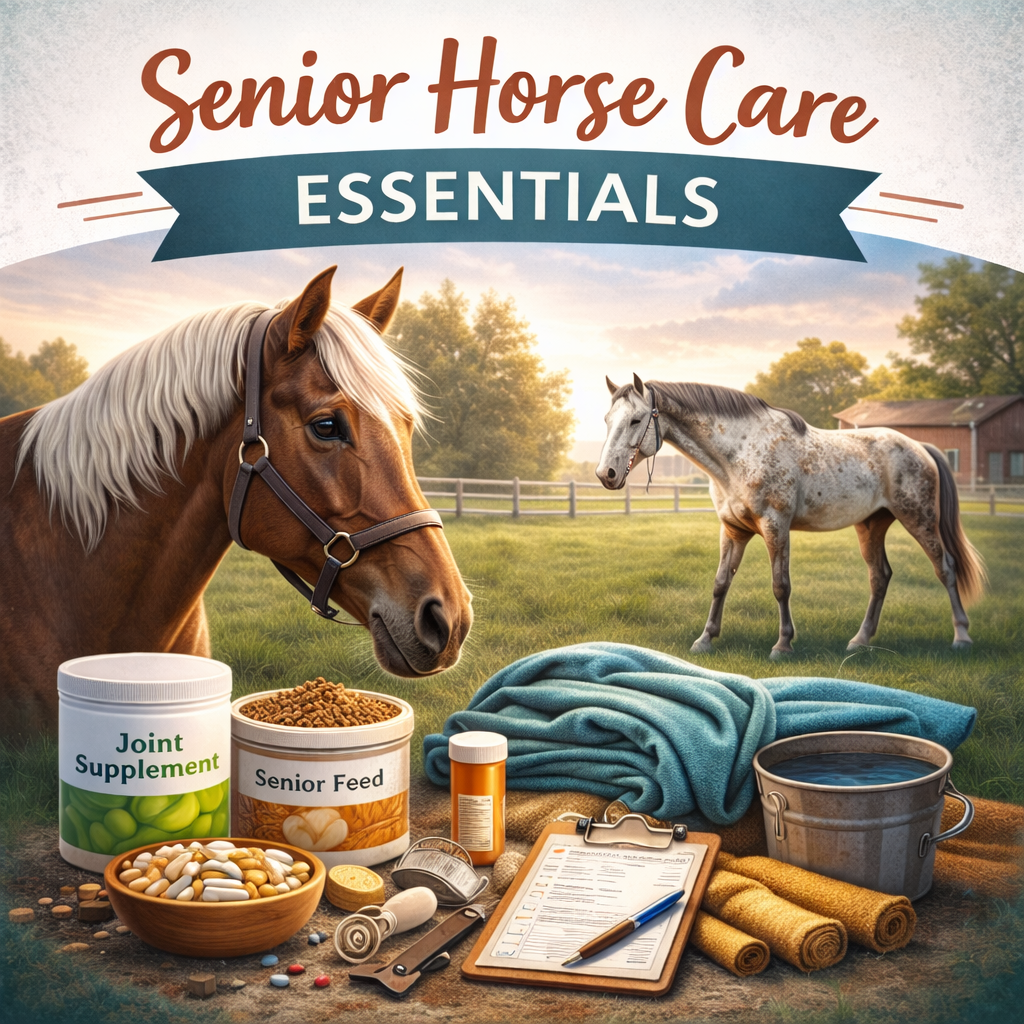
Advances in nutrition, dentistry, veterinary care, and management mean horses are living longer than ever before. It is now common to see horses thriving into their late twenties and thirties. However, ageing brings physiological changes that require proactive, tailored management.
Senior horse care is not about treating age as a disease — it is about adjusting management to support changing needs.
This guide explains what happens as horses age and how to maintain comfort, condition, and quality of life.
When Is a Horse Considered Senior?
There is no fixed age, but generally:
- 15–20 years = mature
- 20+ years = senior
- 25+ years = geriatric
Biological age matters more than chronological age.
- Some 22-year-olds remain active and fit
- Some 17-year-olds show age-related decline
Assess the individual — not just the number.
1. Weight and Muscle Maintenance
Ageing horses often struggle to maintain topline and body condition due to:
- Reduced digestive efficiency
- Dental wear
- Reduced muscle synthesis
- Hormonal changes
Monitor body condition monthly.
Watch for:
- Loss of muscle along the spine
- Prominent hips
- Difficulty maintaining weight through winter
Weight loss should never be dismissed as “just old age.”
2. Dental Care Becomes Critical
Dental wear accumulates over time.
Common senior dental issues include:
- Worn molars
- Missing teeth
- Wave mouth
- Difficulty chewing long fibre
Signs of Dental Problems
- Quidding (dropping feed)
- Slow eating
- Weight loss
- Undigested fibre in droppings
Senior horses may require:
- Soaked feeds
- Chopped forage
- Dental checks every 6 months
Nutrition must match chewing ability.
3. Digestive Efficiency Declines
Older horses absorb nutrients less efficiently.
Support digestion by:
- Providing high-quality forage
- Feeding smaller, more frequent meals
- Avoiding sudden dietary changes
- Considering senior feeds where appropriate
Digestibility matters as much as calorie intake.
4. Joint and Mobility Support
Age increases wear on:
- Hocks
- Stifles
- Fetlocks
- Spine
Early Signs of Stiffness
- Slower to warm up
- Reluctance to lie down
- Reduced stride length
- Difficulty backing up
Management strategies:
- Regular gentle movement
- Consistent turnout
- Avoid prolonged stabling
- Maintain appropriate hoof balance
- Seek veterinary advice if needed
Movement helps preserve mobility — prolonged rest often worsens stiffness.
5. Metabolic Disorders
Senior horses have higher risk of:
- PPID (Cushing’s disease)
- Insulin dysregulation
- Laminitis
Watch for:
- Delayed coat shedding
- Increased drinking and urination
- Recurrent infections
- Lethargy
- Unexplained laminitis
Early testing enables effective management.
6. Immune System Changes
Older horses may:
- Recover more slowly from illness
- Develop recurrent infections
- Show slower wound healing
Maintain:
- Vaccination schedules
- Regular dental care
- Parasite monitoring
- Clean living conditions
Preventative care becomes increasingly important.
7. Thermoregulation Changes
Senior horses may struggle more with:
- Cold weather
- Damp conditions
- Rapid temperature changes
They may benefit from:
- Appropriate rugging
- Close winter monitoring
- Increased forage for warmth
Balance is key — avoid overheating.
8. Hoof and Farriery Considerations
Age can affect hoof growth and balance.
Monitor for:
- Slower hoof growth
- Increased cracking
- Changes in stance
Regular trimming remains essential — good hoof balance supports joint comfort.
9. Mental Wellbeing
Senior horses benefit from:
- Stable companions
- Consistent routines
- Gentle interaction
- Low-stress environments
Isolation or frequent changes can negatively affect emotional health, which in turn influences physical wellbeing.
10. Quality of Life Assessment
Regularly assess:
- Appetite
- Comfort level
- Mobility
- Social interaction
- Engagement with surroundings
Age alone does not determine quality of life. Pain or chronic distress should be addressed compassionately with veterinary guidance.
Signs a Senior Horse Is Thriving
A well-managed senior horse will:
- Maintain appropriate weight
- Show interest in surroundings
- Move comfortably within limits
- Eat consistently
- Interact socially
- Appear relaxed and content
Age does not equal decline — management shapes outcomes.
The Core Principle
Senior horse care requires:
- Closer monitoring
- Nutritional adaptation
- Dental diligence
- Joint support
- Metabolic awareness
- Compassionate observation
Older horses give years of partnership — they deserve care that evolves with them.
Proactive management allows many seniors to live comfortable, meaningful lives well into advanced age.
.
Knowledge Hub: https://jsm-equestrian-supplies.co.uk/knowledge-hub/
Category: https://jsm-equestrian-supplies.co.uk/category/horse-health/
Leave a Reply