
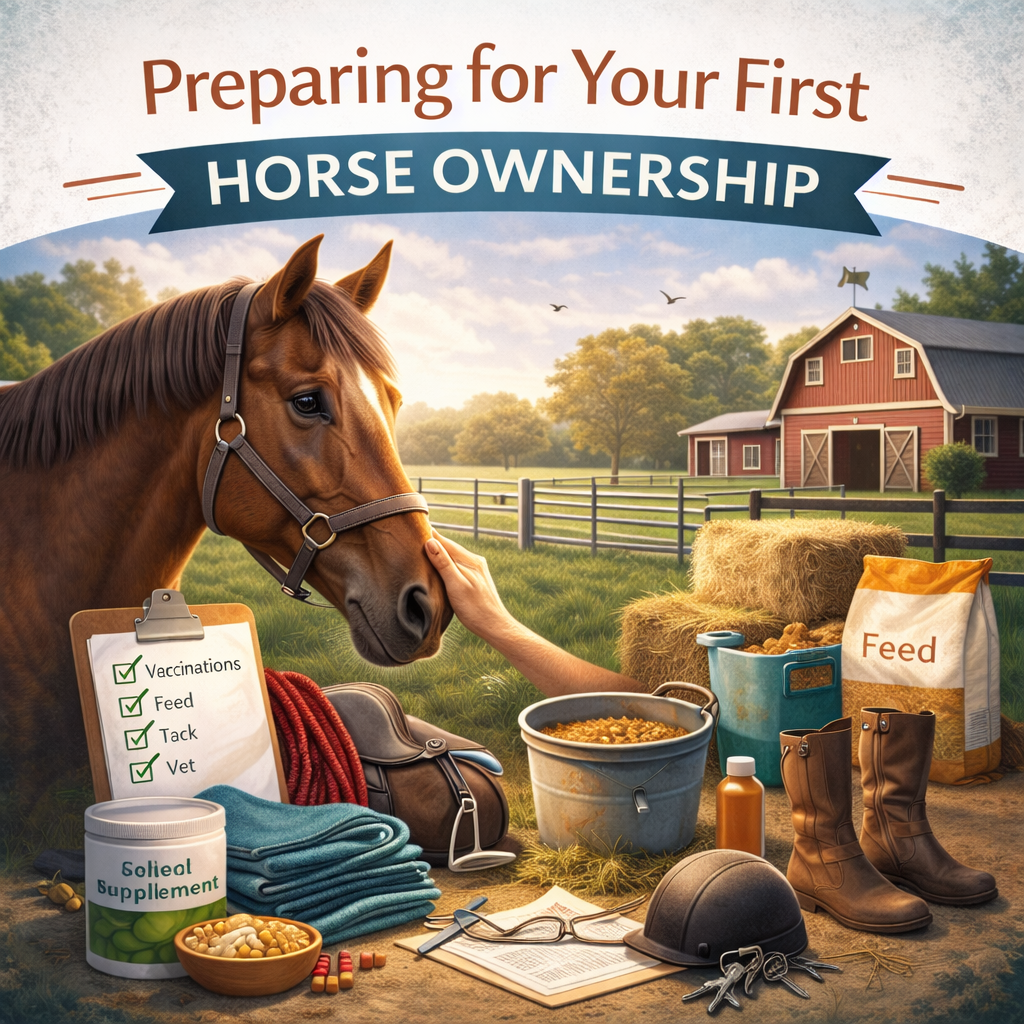
Owning your first horse is exciting — but it is also one of the most significant financial, emotional, and time commitments you can make. Horses depend entirely on consistent, informed management. Preparation determines whether ownership feels rewarding or overwhelming.
Buying a horse is the easy part.
Providing stable, long-term care is the responsibility.
This guide outlines what prospective owners should realistically consider before taking on full ownership.
1. Understanding the True Commitment
Horse ownership requires:
- Daily attendance (including weekends and holidays)
- Financial stability
- Emotional resilience
- Physical capability
- Long-term planning
Horses cannot be paused when life becomes busy — they require consistent care every day.
2. Financial Planning — Beyond the Purchase Price
The purchase cost is only the beginning.
Ongoing costs include:
- Livery or field rent
- Feed and forage
- Bedding
- Farrier visits (every 4–8 weeks)
- Routine vaccinations
- Dental checks
- Parasite control programme
- Insurance
- Tack replacement and maintenance
- Emergency veterinary care
Unexpected veterinary bills can run into thousands — always budget beyond ideal scenarios. Financial strain can compromise welfare.
3. Choosing the Right Horse — Not the Most Impressive One
Match the horse to:
- Your riding ability
- Your confidence level
- Your available time
- Your support network
Avoid buying:
- A horse beyond your experience
- A behavioural project without professional support
- A high-performance horse without infrastructure
Temperament suitability matters more than talent — a sensible horse builds confidence.
4. Pre-Purchase Vetting Is Essential
Never skip a pre-purchase examination.
A vetting assesses:
- Soundness and movement
- Heart and respiratory function
- Flexion responses
- Eyesight
- Conformation
While not a guarantee, it reduces the risk of hidden problems.
5. The Importance of a Support Network
First-time owners benefit from having:
- An experienced yard manager or owner
- A reliable farrier
- A trusted vet
- A knowledgeable instructor
- Supportive, experienced peers
Ownership without guidance increases stress — support prevents avoidable mistakes.
6. Understanding Daily Care Requirements
Daily responsibilities include:
- Feeding
- Checking water
- Mucking out
- Turnout management
- Grooming
- Health checks
- Rug adjustments
- Exercise
Even with assisted livery, involvement is essential.
7. Education Before Ownership
Before buying, aim to understand:
- Basic equine first aid
- How to check vital signs
- Hoof care fundamentals
- Feeding principles
- Rugging decisions
- Signs of discomfort or illness
Education builds confidence and reduces anxiety.
8. Emotional Responsibility
Horses often live 20–30 years.
Ask yourself:
- What if your circumstances change?
- Can you support retirement care?
- Are you prepared for difficult health decisions?
Ownership includes responsibility through illness, ageing, and end-of-life care.
9. Yard Selection Considerations
If keeping your horse at livery, assess:
- Turnout quality and availability
- Winter field management
- Stable condition
- Safety standards
- Yard professionalism
- Overall atmosphere
The environment affects both horse welfare and owner experience.
10. Managing Expectations Realistically
First ownership often involves:
- Unexpected veterinary visits
- Behavioural challenges
- Weather frustrations
- Financial surprises
- Ongoing learning
Progress is rarely linear — patience and adaptability are essential.
11. Insurance Is Essential
Insurance should include:
- Veterinary fee cover
- Public liability
- Loss of use (where appropriate)
Emergency surgery without insurance can be financially overwhelming — protection provides peace of mind.
12. Consider Loaning First
Before full ownership, consider:
- Part loan
- Share arrangements
- Assisted ownership
This allows you to gain experience and confirm readiness without full responsibility.
13. The Reward of Prepared Ownership
When approached thoughtfully, ownership offers:
- Partnership and trust
- Skill development
- Emotional connection
- Personal growth
- Long-term fulfilment
Preparation — not impulse — creates positive experiences.
Common First-Time Mistakes
- Buying based purely on emotion
- Underestimating ongoing costs
- Overestimating available time
- Choosing a horse beyond skill level
- Skipping professional advice
Preparation prevents regret.
The Core Principle
First-time ownership should be approached with:
- Financial planning
- Education
- A strong support network
- Realistic expectations
- A long-term commitment mindset
A prepared owner creates a stable, secure environment where horses can thrive.
Ownership is not just about having a horse — it is about being ready to care for one responsibly.
Knowledge Hub: https://jsm-equestrian-supplies.co.uk/knowledge-hub/
Category: https://jsm-equestrian-supplies.co.uk/category/rider-education/
Leave a Reply