

Blog
Signs Your Horse Is Bored And How to Help

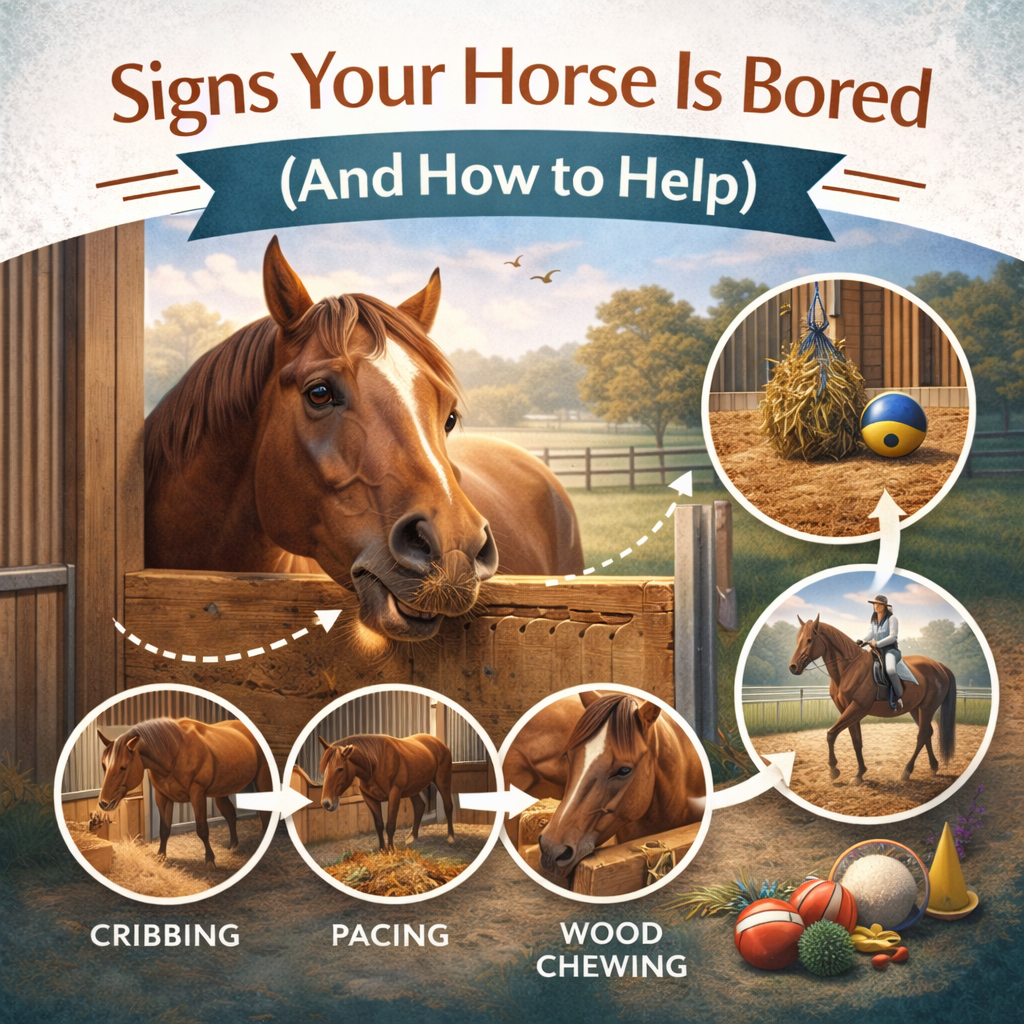
Boredom in horses is often underestimated. While horses are adaptable animals, they are biologically designed for near-constant movement, foraging and social interaction. When modern management restricts these natural behaviours, psychological stress can develop.
Boredom is not simply “having excess energy.” It is a welfare concern that, if left unmanaged, can lead to behavioural problems and physical health consequences.
This guide explains how to recognise boredom and how to address it constructively.
Why Boredom Matters
A bored horse may develop:
- Stable vices
- Aggression
- Anxiety
- Reduced performance focus
- Stress-related health issues
Mental stimulation is as important as physical care.
Welfare includes psychological wellbeing.
1. Repetitive Stable Behaviours (Stable Vices)
Common boredom-related behaviours include:
- Weaving
- Box walking
- Crib biting
- Windsucking
- Repetitive pawing
These behaviours often begin as coping mechanisms.
Over time, they can become habitual.
They may also indicate stress beyond boredom — so investigate underlying causes.
2. Excessive Vocalisation
A horse that calls frequently when alone may be:
- Socially stressed
- Under-stimulated
- Seeking interaction
While some vocalisation is normal, persistent calling can indicate distress.
Horses are herd animals — isolation increases psychological strain.
3. Aggression During Routine Tasks
Sudden irritability during:
- Feeding
- Grooming
- Tacking up
May reflect frustration rather than disobedience.
A bored horse with pent-up energy can become reactive.
Behaviour is often communication.
4. Hyperactivity Under Saddle
Bored horses may:
- Rush transitions
- Spook excessively
- Struggle to focus
- Become tense in familiar environments
Mental under-stimulation often manifests as over-reactivity during work.
Exercise alone does not solve boredom — variety matters.
5. Destructive Behaviour
In stable or field, this may include:
- Chewing wood
- Destroying water buckets
- Ripping rugs
- Fence chewing
Destructive behaviour often stems from lack of engagement.
Environmental enrichment reduces this tendency.
6. Loss of Engagement
Some horses respond to boredom by withdrawing.
Signs include:
- Dull expression
- Reduced curiosity
- Minimal response to environment
- Low interaction with handler
Not all boredom appears dramatic — quiet disengagement can be equally concerning.
7. Reduced Appetite or Selective Eating
Stress-related boredom may affect feeding patterns.
A horse may:
- Pick at hay
- Leave concentrates
- Graze less enthusiastically
Appetite shifts should always be monitored carefully.
Contributing Management Factors
Boredom risk increases with:
- Limited turnout
- Social isolation
- Inconsistent routine
- Lack of environmental variation
- Long periods of confinement
Modern management must compensate for natural behaviour restriction.
How to Reduce Boredom Safely
1. Increase Turnout Where Possible
Even short additional turnout periods help.
Movement and grazing naturally occupy time.
Social contact reduces isolation stress.
2. Provide Forage-Based Enrichment
Options include:
- Multiple small-holed haynets
- Forage placed in different locations
- Safe treat or fibre balls (used sparingly)
Foraging extends eating time and mimics natural behaviour.
3. Vary Exercise Routine
Introduce:
- Pole work
- Hacking
- Groundwork
- In-hand exercises
- Light agility challenges
Mental engagement improves behaviour under saddle.
Repetition without variation leads to disengagement.
4. Safe Stable Enrichment
Where appropriate:
- Stable mirrors
- Hanging toys
- Fibre-based enrichment items
Always ensure items are safe and supervised initially.
Not all horses respond the same way.
5. Social Interaction
If turnout is limited:
- Allow visual contact between horses
- Groom or hand-graze regularly
- Increase positive human interaction
Horses require companionship.
Social deprivation amplifies boredom.
6. Maintain Consistent Routine
Predictability reduces stress.
Consistent feeding and turnout times stabilise behaviour.
Chaos increases frustration.
When Boredom Signals Deeper Issues
If behavioural changes persist despite enrichment, consider:
- Pain-related causes
- Gastric ulcers
- Poor saddle fit
- Dental discomfort
- Social stress
Not all behavioural issues stem purely from boredom.
Rule out physical causes first.
The Core Principle
Boredom is a welfare concern.
Horses thrive on:
- Movement
- Foraging
- Social contact
- Mental engagement
- Predictable structure
Providing environmental enrichment and varied work improves both behaviour and health.
A mentally engaged horse is safer, calmer and more responsive.
Good horsemanship includes psychological care — not just physical management.
.
Knowledge Hub: https://jsm-equestrian-supplies.co.uk/knowledge-hub/
Category: https://jsm-equestrian-supplies.co.uk/category/rider-education/