

Blog
Understanding Equine Digestive Health

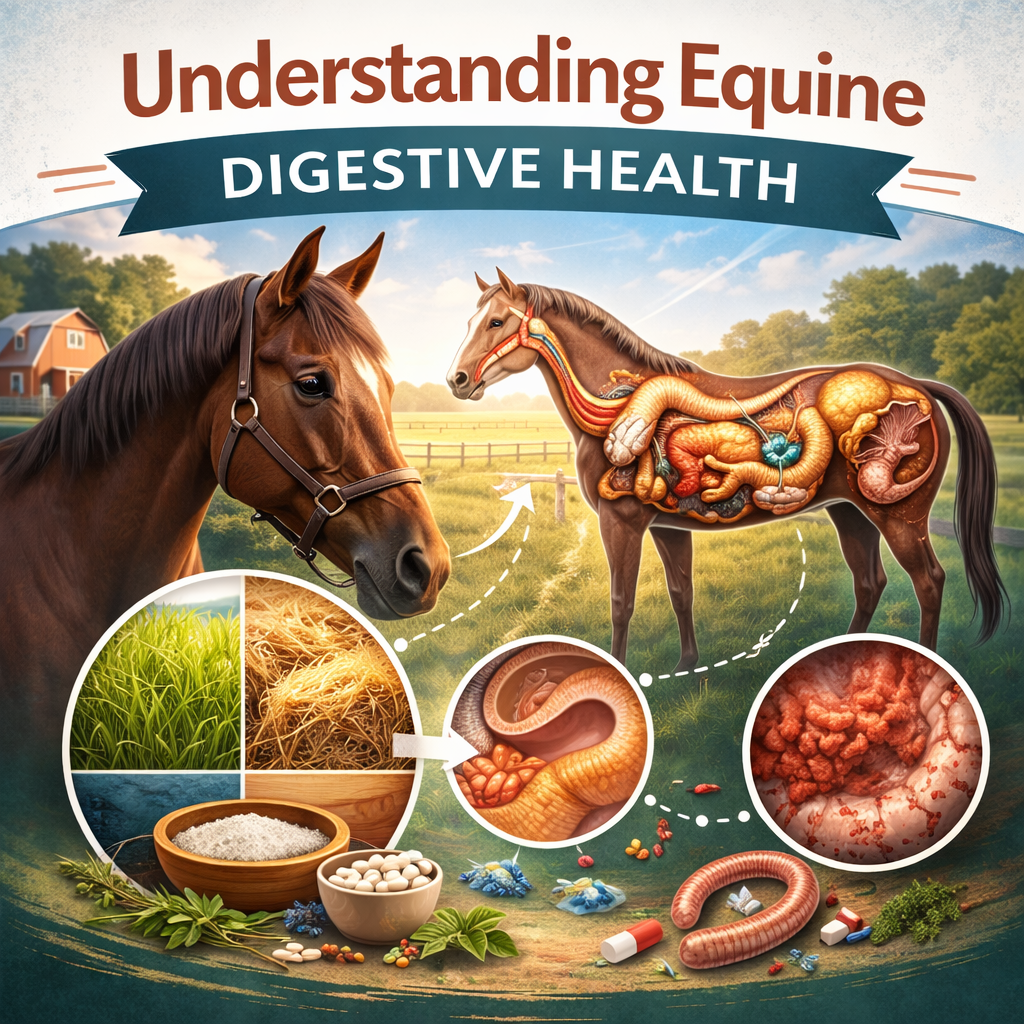
The equine digestive system is highly specialised, delicate, and designed for near-constant forage intake. Many modern management practices — meal feeding, limited turnout, and high-starch concentrates — conflict with this natural design.
Digestive disturbance is one of the leading causes of illness in horses, including colic, gastric ulcers, weight instability, and behavioural changes.
Understanding how the digestive system works allows owners to prevent many common health problems before they occur.
How the Equine Digestive System Is Designed
Horses are hindgut fermenters, biologically adapted to:
- Continuous grazing
- Low-energy, high-fibre forage
- Slow intake across 16–18 hours per day
- Small stomach capacity
- Constant acid production
Modern feeding patterns must respect this physiology.
The Stomach: Small and Always Producing Acid
The horse’s stomach is relatively small — approximately 8–15 litres in an average horse — and produces acid continuously regardless of feeding schedule.
In natural grazing systems:
- Forage buffers stomach acid
- Saliva neutralises acidity
- Constant fibre protects the stomach lining
When horses are fed infrequently:
- Acid accumulates
- The unprotected upper stomach becomes vulnerable
- Ulcers may develop
Long periods without forage increase risk.
Gastric Ulcers: A Common Modern Issue
Ulcers develop when stomach acid damages the lining.
Risk Factors
- Long gaps between meals
- High-concentrate feeding
- Stress
- Travel
- Intense training
- Box rest
Possible Signs
- Poor performance
- Irritability
- Girth sensitivity
- Reduced appetite
- Weight loss
- Mild colic episodes
Ulcers are more common than many owners realise.
The Hindgut: Where Fibre Is Fermented
The caecum and large colon ferment fibre through microbial activity.
Healthy hindgut function relies on:
- Stable microbial populations
- Consistent fibre intake
- Gradual feed transitions
- Adequate hydration
Sudden dietary change disrupts microbial balance and increases colic risk.
The Role of Fibre
Fibre is not optional — it is fundamental.
It provides:
- Steady energy release
- Heat generation in winter
- Gut motility support
- Acid buffering
- Behavioural stability
Horses should consume 1.5–2% of bodyweight in forage daily.
For a 500 kg horse:
- Minimum 7.5–10 kg forage per day
Lower intake increases digestive risk.
Starch and Sugar: The Balance Issue
High-starch feeds:
- Pass rapidly through the stomach
- Can overwhelm the small intestine
- Reach the hindgut undigested
- Disrupt microbial balance
Excess starch increases risk of:
- Colic
- Laminitis
- Hindgut acidosis
Performance does not require excessive starch — fibre-based energy sources are generally safer.
Hydration and Gut Motility
Water intake supports:
- Fibre breakdown
- Smooth intestinal movement
- Reduced impaction risk
Dehydration slows gut motility.
Winter dehydration is a major cause of impaction colic in the UK, so water intake should be monitored year-round.
Warning Signs of Digestive Imbalance
Early digestive stress may present as:
- Loose droppings
- Reduced droppings
- Dull coat
- Irritability
- Mild weight fluctuation
- Recurrent mild colic
Digestive issues rarely appear without warning — subtle signs often precede serious problems.
The Impact of Stress on Digestion
Stress elevates cortisol, which:
- Reduces gut motility
- Alters acid production
- Disrupts microbial balance
Routine disruption, travel, and herd changes frequently trigger digestive upset. Emotional health directly influences gut health.
Supporting Digestive Health Practically
- Provide constant access to forage
- Avoid long fasting periods
- Introduce feed changes gradually (minimum 7–10 days)
- Limit high-starch concentrates
- Monitor hydration closely
- Maintain a consistent routine
- Ensure regular dental care
- Follow an appropriate parasite control strategy
Prevention is always simpler than treatment.
Common Management Mistakes
- Feeding two large concentrate meals daily
- Leaving horses without forage for long periods
- Sudden turnout onto rich pasture
- Abrupt feed brand changes
- Ignoring subtle appetite changes
Digestive systems thrive on consistency — abrupt change creates instability.
When to Seek Veterinary Input
Consult your vet if you observe:
- Persistent weight loss
- Recurrent colic
- Chronic loose droppings
- Suspected ulcers
- Ongoing behavioural changes
Digestive issues rarely resolve if underlying causes remain unaddressed.
The Core Principle
The horse’s digestive system is designed for:
- Constant forage
- Gradual change
- Low starch
- Stable routine
Modern management must adapt to this design — not fight it.
Protect the gut, and you protect:
- Performance
- Immunity
- Behaviour
- Longevity
Digestive health is the foundation of overall equine welfare.
.
Knowledge Hub: https://jsm-equestrian-supplies.co.uk/knowledge-hub/
Category: https://jsm-equestrian-supplies.co.uk/category/horse-health/