
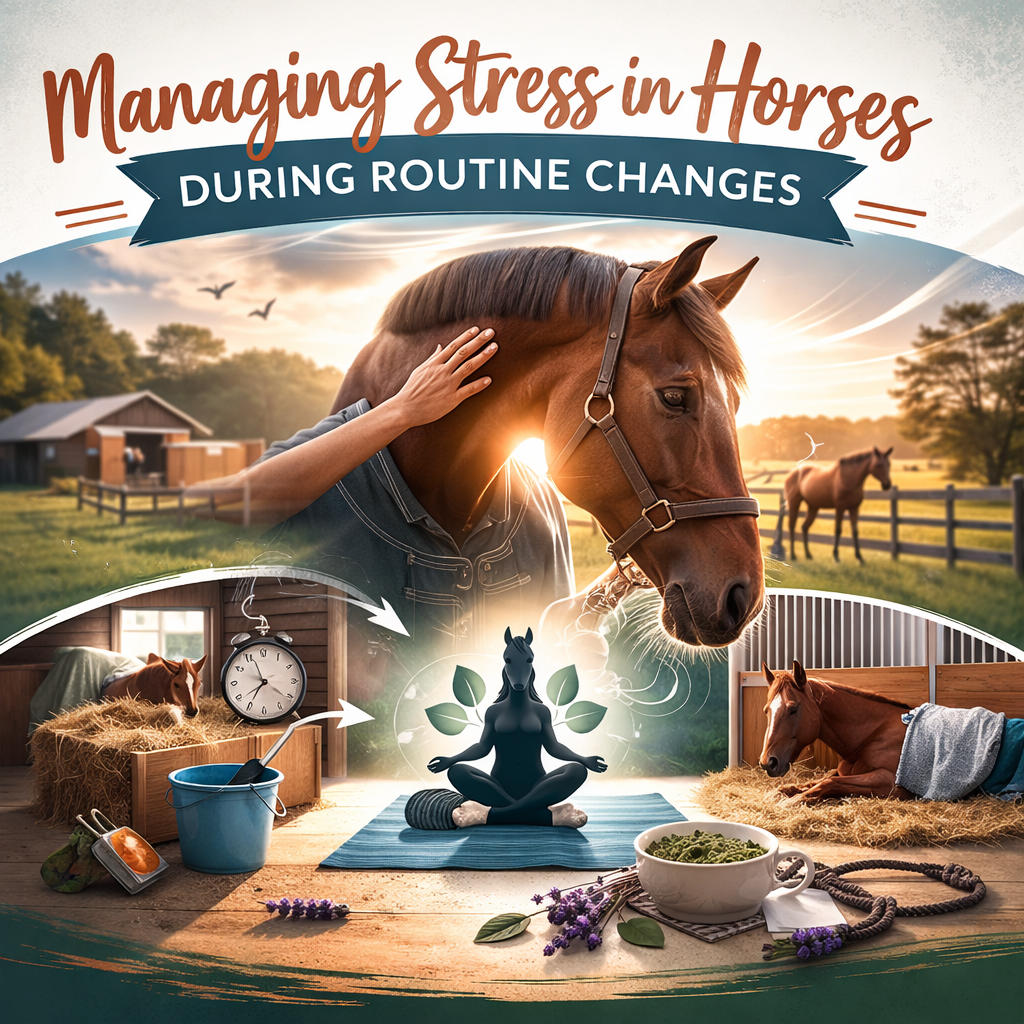
Horses are creatures of habit. Their nervous systems are designed for predictability, routine, and environmental stability. Sudden changes — even seemingly minor ones — can trigger stress responses that affect digestion, immunity, behaviour, and performance.
Stress is not always dramatic. It often presents quietly through subtle behavioural and physiological changes.
This guide explains how routine disruptions affect horses and how to manage transitions without compromising welfare.
Why Routine Matters to Horses
Horses are prey animals, and predictability provides:
- Emotional security
- Stable herd dynamics
- Digestive consistency
- Reduced cortisol levels
- Behavioural stability
When routine changes abruptly, cortisol rises. Elevated stress hormones influence:
- Gut motility
- Immune response
- Muscle tension
- Appetite
- Behaviour
Even positive changes can initially trigger stress.
Common Routine Disruptions
Routine changes may include:
- Yard moves
- Field changes
- Herd reshuffles
- Feed adjustments
- Clipping
- New rider or handler
- Travel
- Changes in turnout hours
- Box rest
Some horses adapt quickly, while others internalise stress.
Early Signs of Stress
Stress does not always look dramatic. Watch for:
- Reduced appetite
- Mild weight loss
- Loose droppings
- Increased spookiness
- Box walking
- Weaving
- Fence pacing
- Tail swishing
- Tension during grooming
Subtle digestive changes are often the first indicators.
1. Introduce Change Gradually
Whenever possible:
- Adjust feed over 7–10 days
- Introduce new fields gradually
- Allow visual contact before herd integration
- Extend turnout changes incrementally
Sudden shifts create unnecessary physiological stress — gradual adaptation reduces cortisol spikes.
2. Maintain Core Anchors
During periods of change, keep key elements consistent:
- Feeding times
- Forage access
- Grooming routine
- Handler approach
- Stable layout (where possible)
Familiar patterns provide psychological stability.
3. Support Digestive Health
Stress directly affects the gut. Prioritise:
- Maintaining adequate fibre intake
- Avoiding sudden concentrate increases
- Ensuring constant access to water
- Monitoring droppings closely
Many colic cases follow stressful transitions — digestive stability is critical.
4. Manage Herd Introductions Carefully
Introducing horses abruptly increases:
- Injury risk
- Cortisol levels
- Resource guarding
Best practice:
- Fence-line introductions first
- Introduce in a large space
- Avoid confined or muddy areas
- Monitor closely for the first 48 hours
Poorly managed introductions can lead to prolonged herd stress.
5. Travel and Competition Stress
Transport elevates heart rate and cortisol.
After travel:
- Provide a quiet environment
- Allow time to rest
- Offer water immediately
- Monitor droppings
- Avoid sudden feed changes
Travel stress commonly triggers mild colic or loose droppings.
6. Clipping and Seasonal Changes
Clipping alters:
- Thermal regulation
- Social scent cues
- Physical sensation
After clipping:
- Monitor rugging carefully
- Watch for behaviour changes
- Ensure appropriate warmth
Sudden discomfort can increase stress responses.
7. Managing Box Rest Stress
Restricted movement can elevate frustration and anxiety.
Support box-rest horses with:
- Increased forage availability
- Stable enrichment (e.g., toys, multiple forage points)
- Consistent human interaction
- Calm surroundings
- Short controlled in-hand walks if permitted
Mental wellbeing supports physical recovery.
8. Recognising Chronic Stress
Chronic stress may present as:
- Persistent weight fluctuation
- Increased ulcer risk
- Reduced performance
- Heightened reactivity
- Poor coat quality
Long-term cortisol elevation impacts overall health — chronic tension should never be normalised.
9. The Role of Human Energy
Horses are highly sensitive to handler emotional state.
During transitions:
- Remain calm
- Avoid rushed movements
- Maintain confident posture
- Use a steady voice
Your energy influences their nervous system and sense of safety.
10. When to Seek Veterinary Advice
Seek professional input if stress leads to:
- Ongoing weight loss
- Recurrent colic
- Persistent diarrhoea
- Severe behavioural change
- Suspected gastric ulcers
Stress should never compromise welfare long-term.
The Core Principle
Change is inevitable — stress does not have to be.
Managing routine transitions effectively requires:
- Gradual introduction
- Stable core routines
- Digestive awareness
- Behavioural observation
- Calm, consistent handling
Horses thrive on predictability. When change is necessary, introduce it with structure — not speed.
.
Knowledge Hub: https://jsm-equestrian-supplies.co.uk/knowledge-hub/
Category: https://jsm-equestrian-supplies.co.uk/category/horse-health/
Leave a Reply